
1. Connect your content
Add your website, blog, or past LinkedIn posts. The AI reads everything and builds a precise map of your expertise, vocabulary, and writing patterns.
An AI writer trained on your content. Every post it writes sounds like you actually wrote it.
Free, no credit card needed
What the AI writer does
Reads your existing content
Learns your voice from your blog, website, and past posts.
Writes the post for you
Hook, body, and CTA. Ready to copy and paste.
Adds a matching visual
On-brand image generated with every post.

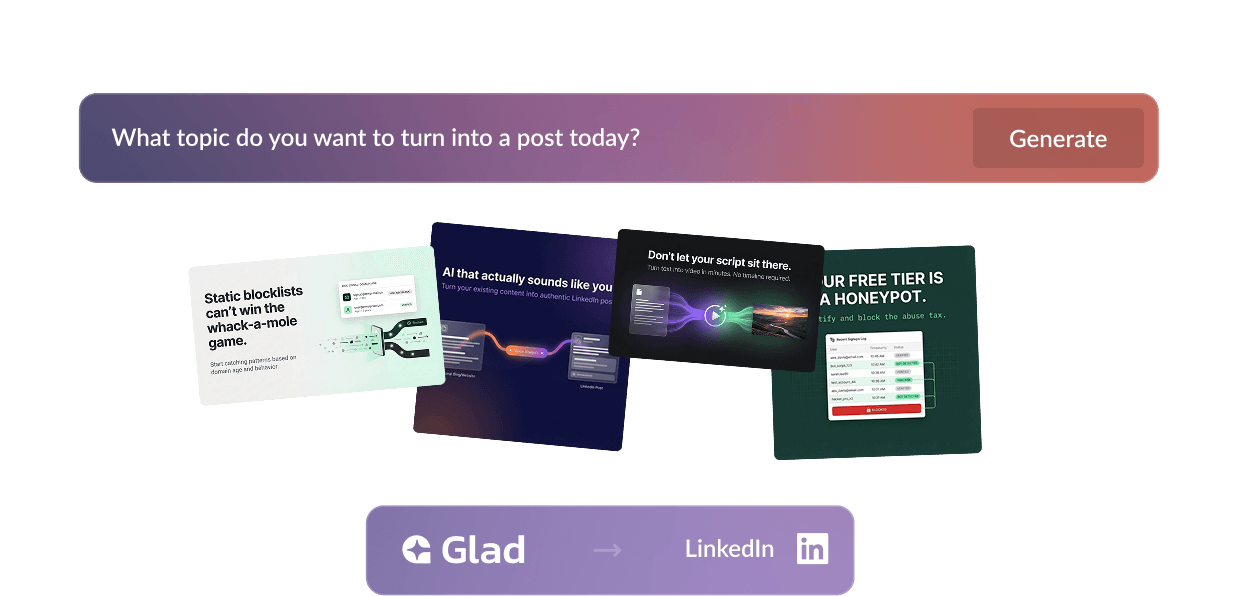
Add your website, blog, or past LinkedIn posts. The AI reads everything and builds a precise map of your expertise, vocabulary, and writing patterns.
Choose from AI-suggested topics or enter your own. Pick a post format (story, insight, list, or contrarian take) and get a written draft in seconds.
Review the post, edit if needed, then publish immediately or schedule for peak engagement times. The AI handles everything after you approve.
Generic AI writes like a LinkedIn influencer. Glad writes like you.
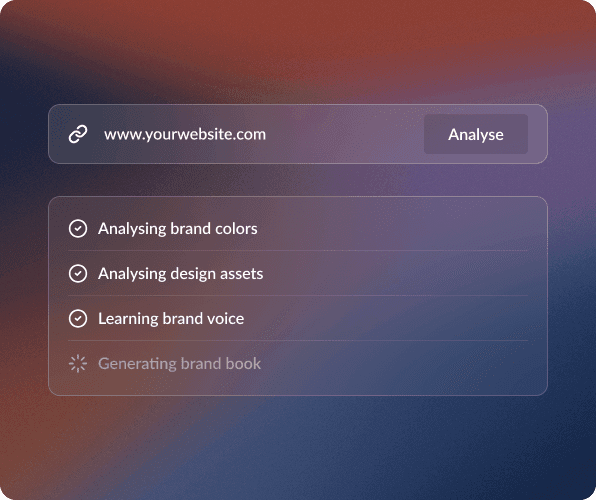
Glad ingests your blog posts, website copy, and LinkedIn history to extract your specific vocabulary, sentence rhythm, and communication patterns. The AI writer uses that profile on every draft before you ever see it.
Each draft is compared against your existing writing using vector embeddings. If the output drifts toward a generic LinkedIn tone, it gets rewritten. You only see posts that actually sound like you.
Every post you publish adds to your voice profile. The AI writer becomes more accurate over time, not less. The opposite of tools that plateau after the first few uses.
The AI writes the whole thing: hook, body, call to action. You just pick the format.
See how the AI post generator works →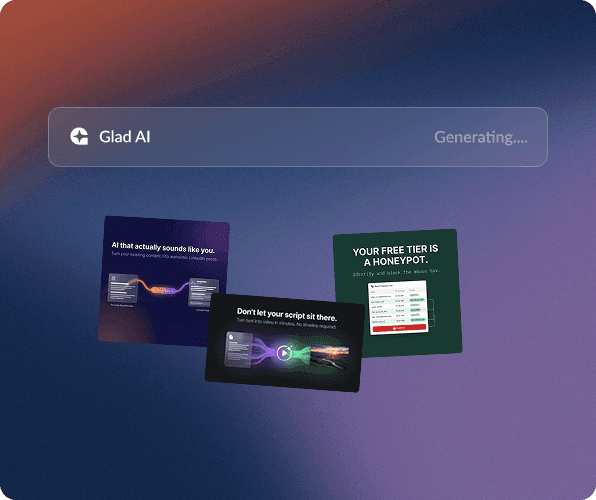
Story-driven posts, data insights, listicles, contrarian takes, personal anecdotes. Each format is pre-structured to maximize engagement on LinkedIn's feed algorithm.
The AI knows how LinkedIn displays posts. The first two lines determine whether anyone reads further. Every post it writes opens with a hook designed to stop the scroll.
Need to sound more authoritative for one post, more relatable for another? Switch tone within the writer without losing your underlying voice.
No blank page. No brainstorming. Just approve and write.
Glad analyzes your knowledge base and industry signals to surface fresh, specific angles every week. The ideas come from what you already know, not what is trending on LinkedIn.
Posts are organized around pillar topics and supporting angles so your writing builds cumulative niche authority, not a random mix of disconnected content.
Each post includes an on-brand image option generated alongside the copy. The visual matches what the post says, not a stock photo chosen at random.
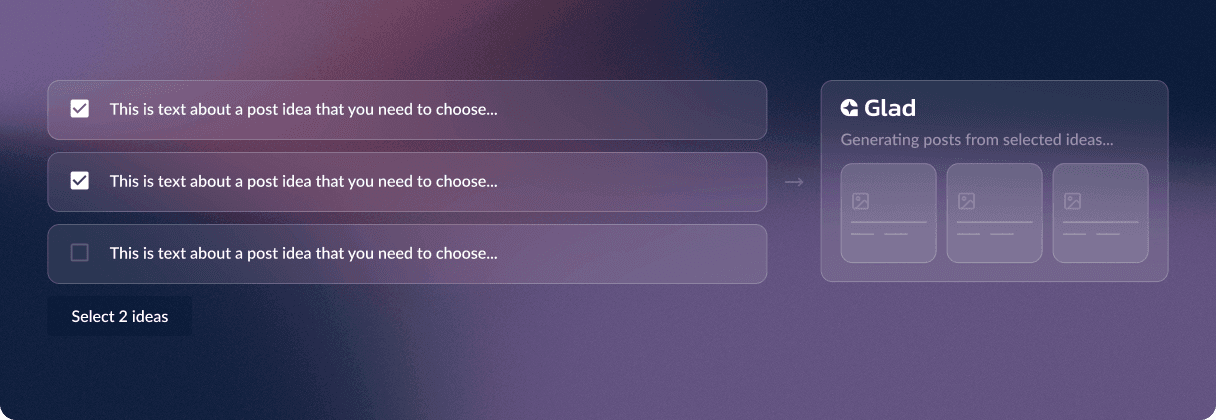
Batch a full week of LinkedIn posts in one session. Glad publishes them for you.
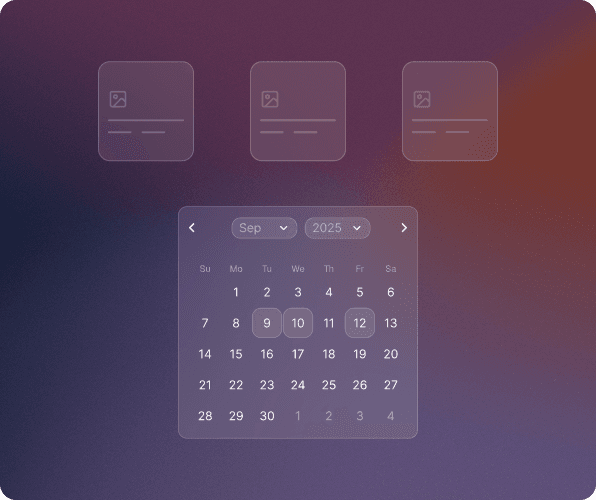
Glad picks the best time to publish for your specific audience. Not a generic "post on Tuesday at 9am" recommendation, but a data-driven slot based on your followers' actual activity.
All your written and scheduled posts in one place. Drag, reorder, or edit before anything goes live. Full control without managing a spreadsheet.
LinkedIn rewards consistency. Glad keeps your feed active even when you are heads-down in work, so you never lose the momentum you have built.
No credit card required
Problem: Every LinkedIn AI writer produces the same polished, empty posts.
Solution: Glad trains on your content first (your blog, your website, your posts) so the output reflects your actual expertise and perspective.
ChatGPT is a blank page with an AI attached. Glad gives you topic ideas, writes the post, generates the image, and schedules it. A full LinkedIn writing workflow in one tool.
Most AI writers stay the same no matter how much you use them. Glad's voice profile deepens as you publish more content. The AI becomes a more accurate writer of you the longer you work together.
A LinkedIn AI writer is a tool that uses artificial intelligence to write LinkedIn posts on your behalf. Most AI writers produce generic output because they have no context about who you are. Glad works differently: it first reads your existing content (blog posts, website copy, past LinkedIn posts) to learn how you write, then produces posts that match your vocabulary, tone, and style.
Glad ingests your knowledge sources (website, blog, LinkedIn history) and builds a semantic voice profile using vector embeddings. When you ask it to write a post, it draws from that profile to match your exact writing patterns. You choose a topic or idea, pick a format, and get a ready-to-publish draft in seconds.
Yes. Glad AI offers a free plan with 15 credits, enough to write approximately 3 complete LinkedIn posts with images. No credit card required to start. Paid plans begin at $29/month for 50 credits.
ChatGPT writes from a blank prompt and produces output that sounds like everyone else on LinkedIn. Glad is specifically trained on your content (your blog, your website, your previous posts) so every draft reflects your actual expertise and tone. It also handles the full pipeline: topic ideas, writing the post, generating a matching image, and scheduling. ChatGPT does one step; Glad handles all of them.
No. LinkedIn does not penalize AI-assisted writing. Glad generates draft posts that you review and approve before anything goes live. It is a writing assistant, not an automation bot. It does not automate likes, comments, or connection requests, which would violate LinkedIn's terms of service.
Authenticity comes from specificity. Generic AI writers have no context about you, so they produce polished but hollow content. Glad builds a voice profile from your actual writing using semantic analysis, extracting your vocabulary, sentence rhythm, preferred structures, and subject-matter expertise. Every post it writes is checked against that profile before you see it.
Yes. Glad supports multiple LinkedIn post formats: storytelling narratives, data-driven insight posts, contrarian takes, listicles, and personal anecdotes. You choose the format; Glad writes a draft that fits both the format structure and your personal voice.